K-LOVE
- 4.6
- Rating
- 1.00M
- Installs
- Free
- Price

 Analysis by App-foxy
I approached K-LOVE as a simple way to keep Christian music and radio close at hand rather than as a full replacement for every music service on my phone. That distinction matters. If you want a focused listening experience built around K-LOVE, the app is easy to understand and quick to start using. If you expect a large personal music library, detailed album controls, or the discovery tools found in broad streaming platforms, you may find it more limited.
The app belongs to the Music & Audio category and is developed by Educational Media Foundation. Its purpose is reflected in its straightforward presentation: take the K-LOVE listening experience with you when you are away from a traditional radio. I found that focus reassuring because there is not much to decode before pressing play. The free price also makes it approachable for someone who wants to test the experience without committing to a subscription.
What to expect before you start listening
The first thing I would tell a new user is not to treat this as a general-purpose music catalog. K-LOVE is better understood as a dedicated radio companion. You open it when you want a familiar Christian music format, encouragement during a commute, or background listening while working, cooking, or getting ready for the day.
You May Also Like

 Blood Strike: 2.5 Anniversary
Blood Strike’s Loadouts Turn Every Drop Into a Tactical Gamble
A close look at Blood Strike’s custom loadouts: how fast access to signature weapons reshapes its battle royale rhythm, rewards preparation, and narrows the gap between fights.

 Pandora - Music & Podcasts
Pandora’s Music Is Easy to Start, but Harder to Recover
Pandora’s strength is its low-effort path from a seed to a station. Its weak spot is how much confidence it asks you to place in connection, setup, and quiet recovery.

 8 Ball Pool
 Is Built on Rivalries, Rematches, and Routine
A close look at the rivalries, rematches, shared routines, and unanswered safety questions that turn a quick pool match into a persistent mobile community.

 Samsung Music
’s Quiet Strength Is Playing What You Already Own
Its reach comes less from spectacle than from dependable access to a personal library. That simplicity is both the app’s strongest retention engine and its ceiling.

 AccuWeather: Weather Radar
AccuWeather Review: A Quick, Clear Forecast for Everyday Decisions
For everyday plans, the best forecast is the one you can understand quickly. AccuWeather makes rain timing, radar, and local conditions easy to act on, with a few trade-offs.

 Hill Climb Racing
Why Hill Climb Racing Still Turns Crashes Into One More Run
A tiny car, a bumpy hill and one more upgrade: Hill Climb Racing keeps resurfacing because its simple chaos makes every near-miss feel personal.
More From Our News Desk



That radio-first approach changes how I judge it. With an on-demand service, I usually expect to search for a specific artist, choose an album, build a queue, and control every track. Here, the appeal is more immediate: start the station and let the programming carry the session. It is a good fit for people who prefer not to spend several minutes deciding what to play.
In everyday use, that can be a real advantage. Imagine leaving home for a morning drive and wanting something positive without assembling a playlist. Instead of switching between songs or checking recommendations, I can open the app and move directly toward listening. The app earns its place on a phone through that small reduction in effort.
It is also suitable for listeners who already know K-LOVE from another setting and want continuity outside the car. The experience feels most natural when you want the station itself, not when you are trying to manage a carefully curated personal collection. That is the central trade-off to understand before installing it.
The app is rated for Everyone, which matches its broad, accessible purpose. It has been available since February 11, 2013, and its current version is 8.1.21. For device compatibility, it requires Android 5.0 or later. Those details make it a practical option for people using an older Android phone, although the exact experience can still vary with the device and connection.
Its audience is not limited to devoted radio listeners. I can see it working for someone exploring Christian music for the first time, a parent looking for a simple listening option in a shared space, or a person who wants a calm audio companion without the distraction of a large entertainment catalog. The important point is that the app’s value comes from its narrow purpose.
Who will appreciate the focused format
I would recommend trying it if your ideal listening session begins with “I want K-LOVE on right now.” That sentence describes the app better than a list of technical features. It is useful when the station’s overall sound and flow matter more than selecting individual tracks.
It is less convincing for someone who listens mainly to unrelated genres, wants offline albums for travel, or expects a podcast library and a broad collection of stations in one place. A general streaming service may be better for those needs. Installing K-LOVE does not need to be an all-or-nothing decision; it can sit alongside another music app for the moments when you want this particular format.
One subtle benefit of a dedicated app is reduced decision fatigue. I often spend more time browsing than listening when an app presents endless options. K-LOVE avoids making the listener manage a huge menu. The downside is equally clear: when I am in the mood for a specific song outside the station’s programming, the focused design gives me fewer ways to redirect the session.
Getting through setup without overthinking it
For a first-time user, I would keep the initial setup simple. Install the free app, open it, and look for the most direct path to listening rather than exploring every screen immediately. The best first goal is not learning the whole interface; it is confirming that the station plays comfortably on your phone and suits your routine.
Before starting, I recommend checking whether you are connected to a reliable network. Radio-style listening depends on a continuing connection, so a weak signal can make the experience feel worse than the app itself. If you are testing it at home, begin somewhere your phone normally receives a stable connection. That removes an unnecessary variable from the first impression.
I also suggest setting the phone’s media volume before assuming the app is silent. This sounds obvious, but audio apps can be affected by the phone’s mute state, connected headphones, a car system, or another Bluetooth device. My practical setup sequence is simple: check the output device, raise the volume gradually, then press play and wait briefly for the stream to begin.
New users sometimes expect a music app to ask them to choose favorite artists or build a profile before anything useful happens. That expectation can create confusion here. The more productive approach is to look for the listening control first. Once audio is playing, you can decide whether the app deserves a permanent place on the home screen.
Because the app is free, the trial is low risk. I would not spend time customizing the phone around it until I had used it during the situation where I actually need it: a commute, a morning routine, or a quiet work period. A few minutes of real listening tells you more than browsing screens while sitting still.
There is another useful setup habit for people who listen in a car. Test the app while parked, pair or select the intended audio output, and make sure the basic play and pause controls are easy to reach before driving. The goal is to avoid troubleshooting while moving. This is not a special feature claim; it is simply the safest way to introduce any streaming audio app into a car routine.
The first meaningful success: start a session you will actually repeat
For me, the first successful action is not merely opening K-LOVE. It is starting a listening session that fits a real part of the day and returning to it later without friction. Try it during a familiar routine, such as making breakfast or driving to work. If the station’s style supports that routine, the app immediately becomes more useful than it seemed during a quick test.
Once playback begins, resist the urge to judge it by the standards of an on-demand catalog. Let the programming run for a while. The point is to see whether you enjoy being guided rather than choosing every track. That is a meaningful test because the app’s strongest quality is convenience through focus.
I would also test the controls before settling in. Pause the audio, resume it, adjust the volume, and move between the app and another task on the phone. This gives you a practical sense of how well it fits your habits. If you listen while working, for example, you want the audio to remain easy to manage without turning the session into a constant series of taps.
A useful workflow is to make K-LOVE the starting point for a particular moment rather than trying to use it for every musical need. I might use it for the drive home, then switch to a personal library when I want a specific album. This division of labor is more realistic than asking one app to handle both curated radio and detailed music ownership.
For listeners who are new to Christian radio, the first session is also a chance to decide whether the overall tone feels comfortable. Some people want music that supports reflection, positivity, or faith-centered listening throughout the day. Others may prefer more variety or a different balance between music and spoken content. The right choice depends on your taste, not on how many options an app displays.
The app’s broad adoption suggests that the focused concept works for many listeners: it has more than a million installs, an average rating of 4.6 from around twenty-two thousand ratings, and roughly six thousand four hundred written reviews. I see those figures as useful context rather than a guarantee. A strong overall response cannot predict whether the format matches your personal listening habits.
Small points that can confuse new users
The most common misunderstanding is expecting a station app to behave like a personal music locker. If you search for a particular song and cannot treat the result like an owned track, that does not necessarily mean something is wrong. The app’s central experience is the K-LOVE stream, so it makes more sense to evaluate the flow of listening than to look for every control found in a catalog service.
Another possible source of frustration is connectivity. When audio pauses or takes time to begin, I first check the network rather than repeatedly tapping the play control. Moving between Wi-Fi and mobile data can also change the experience. If the app works well at home but struggles on the road, the difference may be the connection along your route rather than the basic idea of the app.
Audio output can be confusing too. If you hear nothing, check whether sound is going to earbuds, a car stereo, or another paired device. I have found that this quick check solves many “the app is not working” moments with audio software. It is especially worth doing after leaving a car or disconnecting headphones.
People also sometimes judge a radio app after only a few seconds. That is not enough time to understand whether it fits. Give the station a proper listening window, then decide. At the same time, do not force yourself to keep using it if you already know you need album downloads, broad genre switching, or precise song selection. Recognizing that mismatch early saves time.
One limitation I would keep in mind is control. A dedicated radio experience can feel wonderfully effortless until you want to change the mood immediately. If you need a carefully ordered playlist for exercise, a study session with no interruptions, or a particular artist on demand, another music app is likely the better tool. K-LOVE works best when you accept some programming control in exchange for simplicity.
There is also a practical difference between listening casually and relying on the app for a long trip. For a short routine, opening the app and streaming is convenient. For travel through areas with unreliable service, I would not make it my only audio plan. Bring another option that does not depend on continuous access, because a radio stream is naturally more vulnerable to coverage changes than locally stored audio.
Finally, remember that “free” makes it easy to try, but it does not remove the need to consider your own data and battery habits. Long listening sessions use the phone in the background and rely on a network connection. I would test it during normal use and watch how it fits your device, especially if your phone is older or your mobile data allowance is tight.
How I would fit it into a larger listening routine
After the first successful session, the next step is to give the app a defined job. I would use it as my quick-access Christian radio option, keeping a broader service for personal playlists and a separate local-audio option for situations where connectivity is uncertain. This arrangement makes the strengths of each tool clearer.
For a morning routine, start K-LOVE before beginning chores and leave it running while you move around the house. For commuting, prepare the app before pulling away and use the phone’s existing audio controls where possible. For quiet background listening, begin with a moderate volume and let the station provide continuity without demanding constant attention.
A less obvious use is emotional pacing during repetitive tasks. When I do not want to make musical decisions but still want something more engaging than silence, a focused station can keep the routine moving. This is different from searching for inspiration in a recommendation feed; the benefit is that the app gets out of the way once the session starts.
I would also recommend evaluating it by consistency rather than by one favorite song. A dedicated radio app may not satisfy every moment, but it can still be valuable if it reliably provides the kind of listening environment you want. Ask yourself whether you open it naturally when the relevant situation arrives. If the answer is yes, it has succeeded even if another app remains your main music library.
The current release, version 8.1.21, is the version I would use when beginning, and the Android requirement of 5.0 or later keeps the entry barrier fairly low. Still, I would keep the app updated through the normal store process and avoid assuming that every screen will look identical on every phone. Device size, Android settings, audio accessories, and network conditions can all affect the practical feel.
Educational Media Foundation’s role is worth noting because it reinforces the app’s identity as a focused media experience rather than an independent music marketplace. That helps explain why I would approach it for the K-LOVE format specifically, not as a universal replacement for every audio app already installed.
My overall view is positive, with a clear boundary. K-LOVE is strongest when you want immediate, faith-centered radio listening with very little setup. It is free, accessible to an Everyone audience, and simple enough for a first-time user to understand quickly. The trade-off is reduced control compared with a full streaming catalog, especially for listeners who want downloads, extensive search, or a completely self-directed queue.
If a friend asked me whether to install it, I would say yes if they already enjoy K-LOVE or want a straightforward Christian music station for daily routines. I would suggest skipping it if their priority is collecting albums, exploring many unrelated genres, or listening without depending on a live connection. Used for the job it is designed to do, it is an uncomplicated companion that can turn a familiar radio format into an easy phone habit.
My final advice is to judge it during one ordinary day, not during a rushed installation. Open it when you genuinely want this kind of audio, confirm that playback fits your connection and speakers, and notice whether the lack of constant choice feels freeing or restrictive. That small test gives you the answer quickly. For me, the app is most successful precisely because it does not try to become everything: it offers a direct path from opening the phone to settling into K-LOVE.
FAQs for K-LOVE
01What is K-LOVE, and what can I listen to in the app?
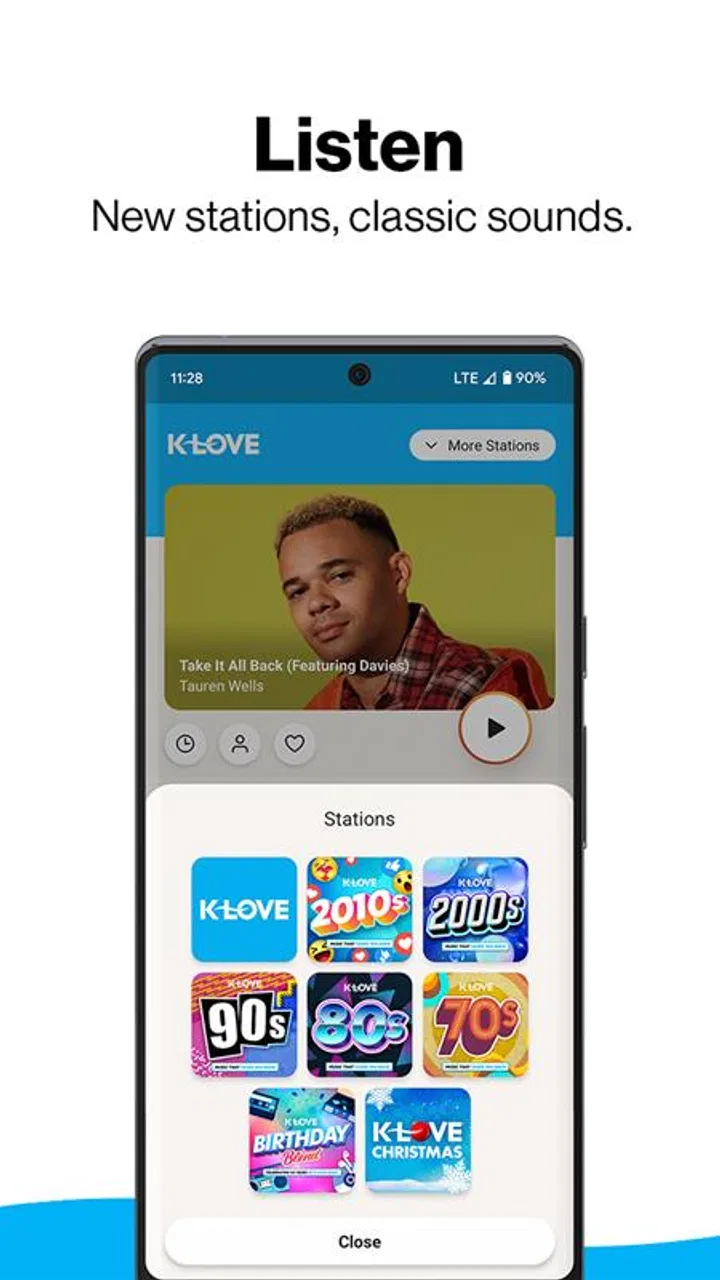
K-LOVE is a Christian radio and music app focused on contemporary inspirational songs, worship music, encouragement, and faith-based programming. After installing it, users can typically listen to a live K-LOVE stream, discover Christian artists, and access uplifting content designed for listening at home, in the car, or while using other apps, depending on device support and connection quality.
02Is the K-LOVE app free to download and use?
The K-LOVE app is generally available to download at no cost, allowing users to access its main radio-listening features without purchasing a subscription. However, the app may rely on internet or mobile data, and optional donation, membership, promotional, or partner features may appear. Before downloading, review the current store listing for the latest information about pricing and in-app purchases.
03Does K-LOVE require an internet connection?
Yes, users should expect an active internet connection for the main streaming experience. K-LOVE normally plays live radio and other online content through Wi-Fi or mobile data, so audio quality can depend on signal strength and network speed. If you plan to listen away from Wi-Fi, check your mobile data allowance because extended streaming may use a noticeable amount of data.
04Can I listen to K-LOVE in the background or while my phone is locked?
The app is designed for convenient listening, and background playback may allow you to continue hearing the station while browsing other apps or locking the screen. Actual behavior can vary according to your Android or iOS version, battery-saving settings, permissions, and updates. If playback stops unexpectedly, checking background activity and notification settings may resolve the issue.
05Is K-LOVE suitable for children and family listening?
K-LOVE is generally aimed at Christian and family-friendly audiences, with music and programming centered on encouragement, faith, and positive messages. Nevertheless, parents should review the current content and features themselves, especially if children will use the app independently. Store age ratings, advertising, external links, and any interactive features can change, so parental controls may still be appropriate.
Pros
- Free access to Christian music
- worship songs
- and uplifting programming.
- Live radio streaming helps users stay connected throughout the day.
- Includes encouraging messages
- interviews
- and faith-focused content.
- Simple interface makes browsing stations and programs easy.
- Useful sleep timer lets you stop playback automatically at bedtime.
Cons
- Some features may require an internet connection and use mobile data.
- The music selection is limited for listeners outside the Christian genre.
- Audio quality can vary depending on network strength and connection speed.
- Frequent promotions or donation requests may interrupt the listening experience.
- Availability of certain stations or content may depend on your location.

K-LOVE
Gallery